Designing an Immersive 3D Furniture Shopping Journey
Overview
This project explores how immersive 3D environments can enhance online furniture shopping. Using ShapesXR, I designed a linear, XR-ready chair purchase experience that allows users to explore, evaluate, and purchase lounge chairs within a spatial interface.
The goal was to replicate the realism and comfort of in-store shopping while maintaining the clarity and simplicity of a modern e-commerce flow.
Objective
To design an interactive 3D shopping experience where users can:
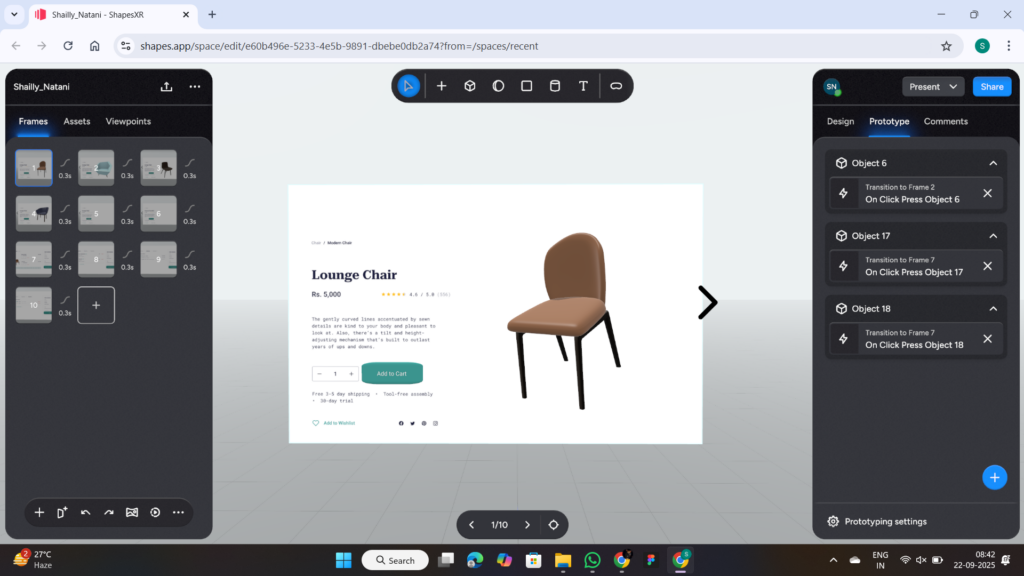
View furniture in realistic 3D from multiple angles
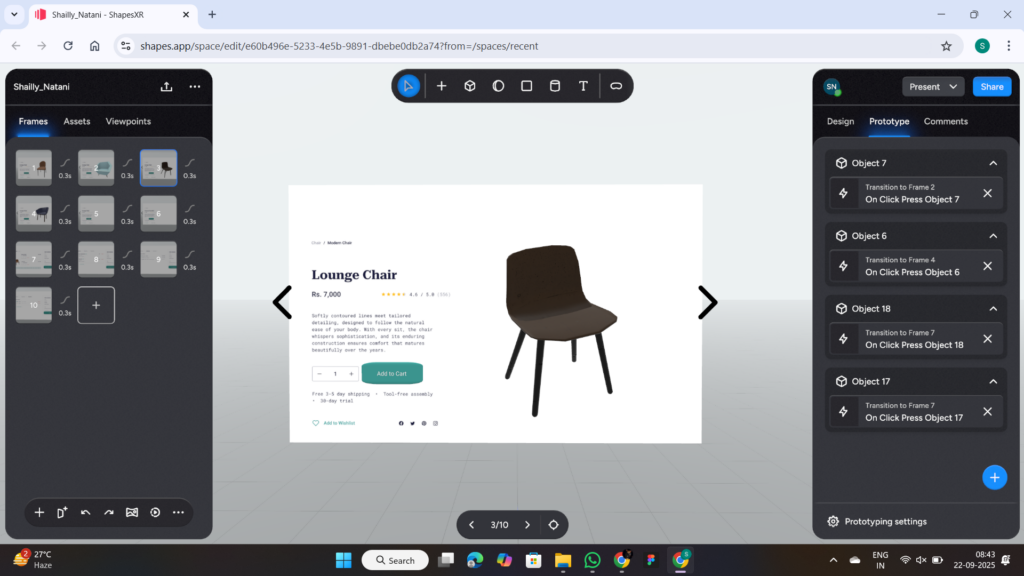
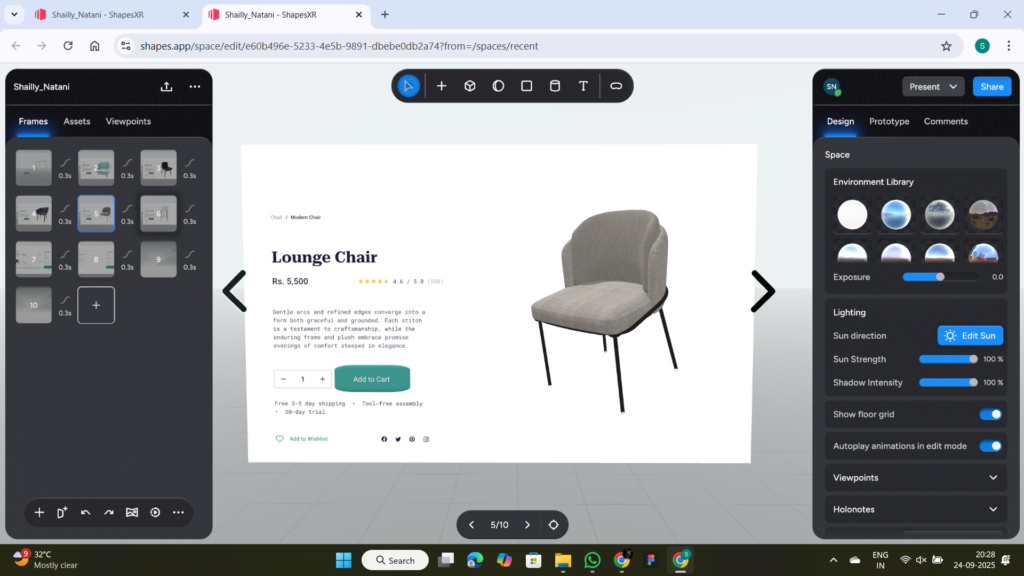
Compare different chair models within one journey
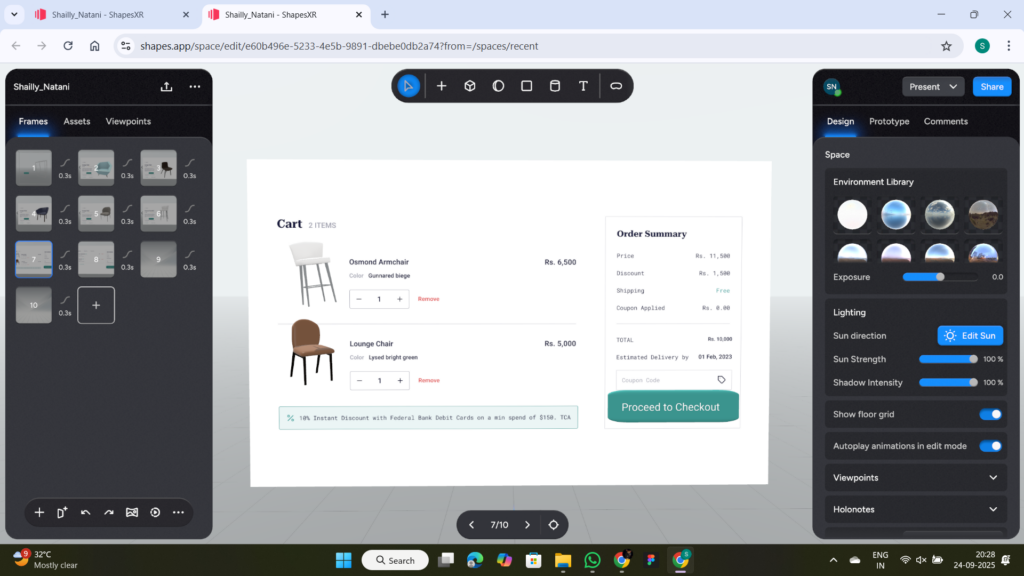
Add items to cart and proceed to checkout seamlessly
Experience a narrative-driven, immersive shopping flow
Storytelling Approach
The experience was guided by a scenario-based narrative:
Meet Riya, a 26-year-old interior enthusiast who recently moved into her first apartment. She wants a cozy yet modern lounge chair but struggles to visualize furniture through traditional 2D websites.
This story shaped the flow: Home → Product Exploration → Add to Cart → Checkout
Every transition and interaction was designed to feel natural, intentional, and human-centered.
Design System & Visual Direction
Interface Layout
Minimal, modern structure
Generous whitespace to reduce cognitive load
Clean composition to keep focus on the 3D product
Typography & Color
Contemporary sans-serif typeface
Teal for primary CTAs (trust + clarity)
White background for product emphasis
Light gray for secondary information
3D Product Representation
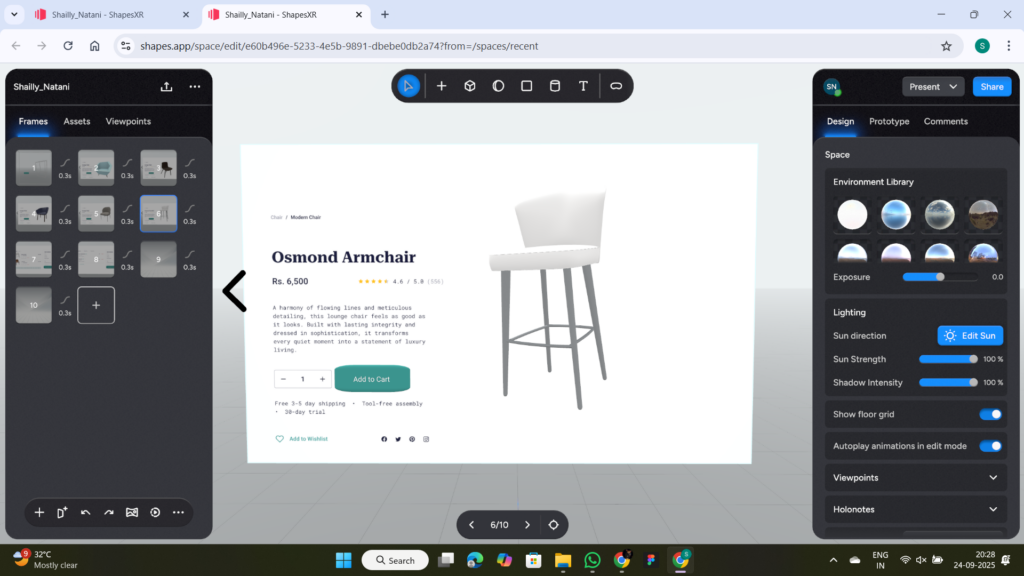
Realistic scale and studio-style lighting
100% shadow intensity to enhance depth
Consistent positioning across all frames
Multi-angle viewing for decision confidence
Interaction Model
Prototyping in ShapesXR
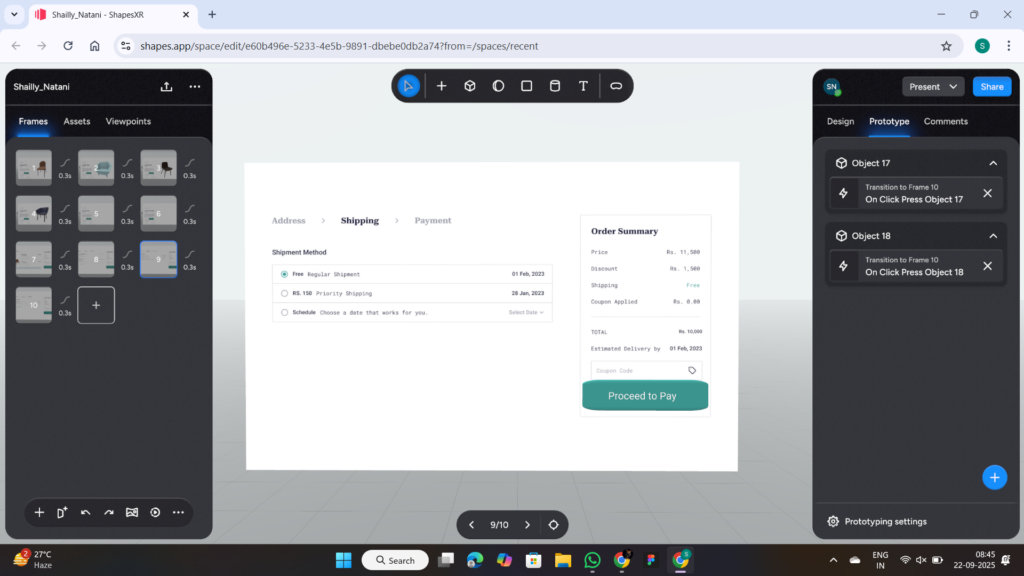
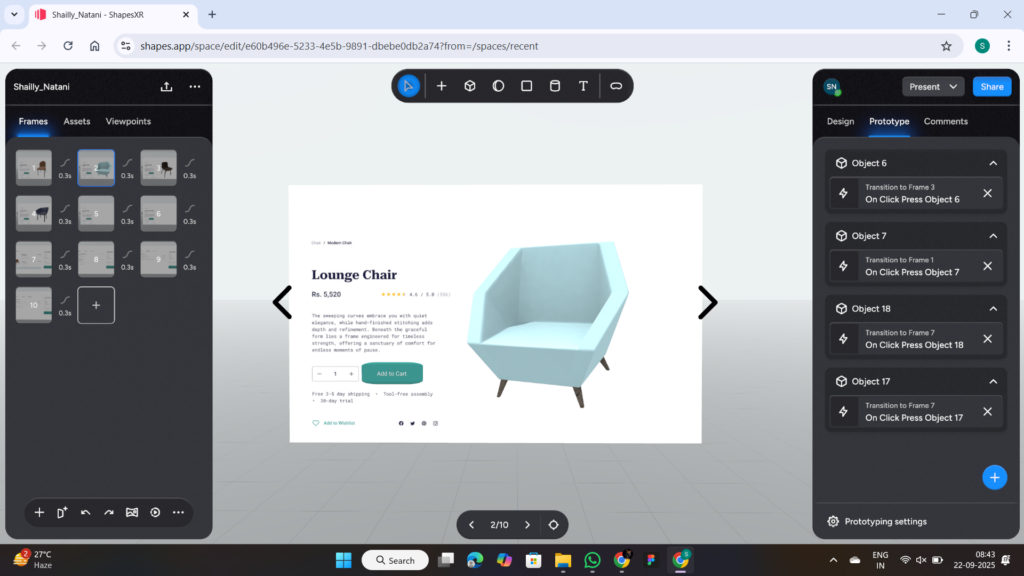
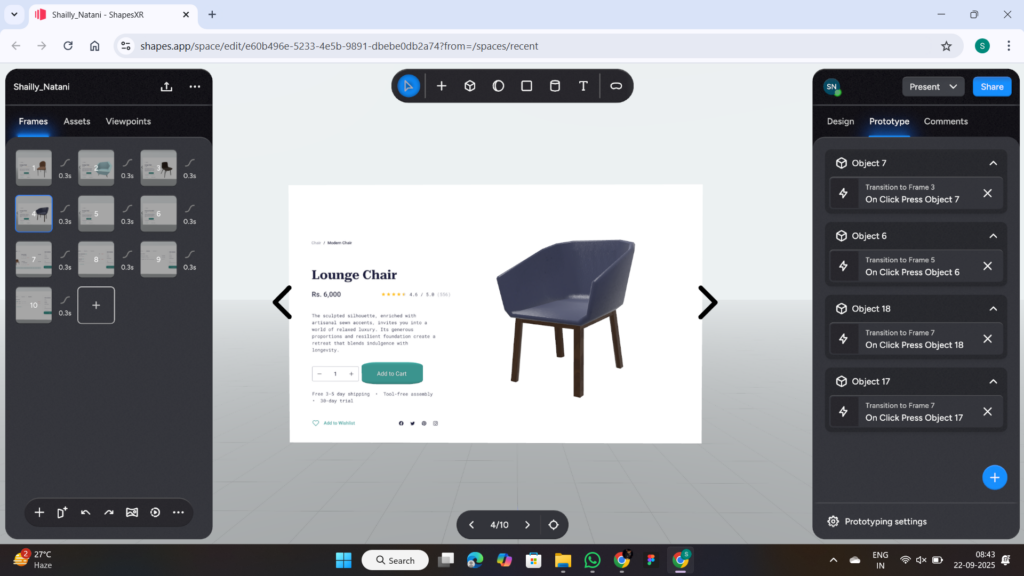
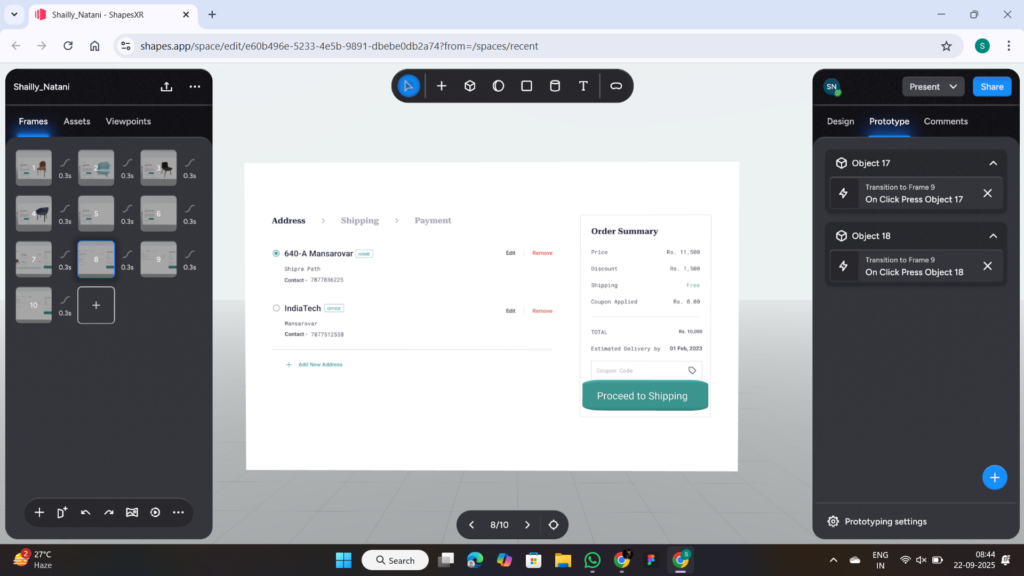
On Click → Transition to Frame interactions
Right arrow → Next product
Add to Cart → Cart Frame
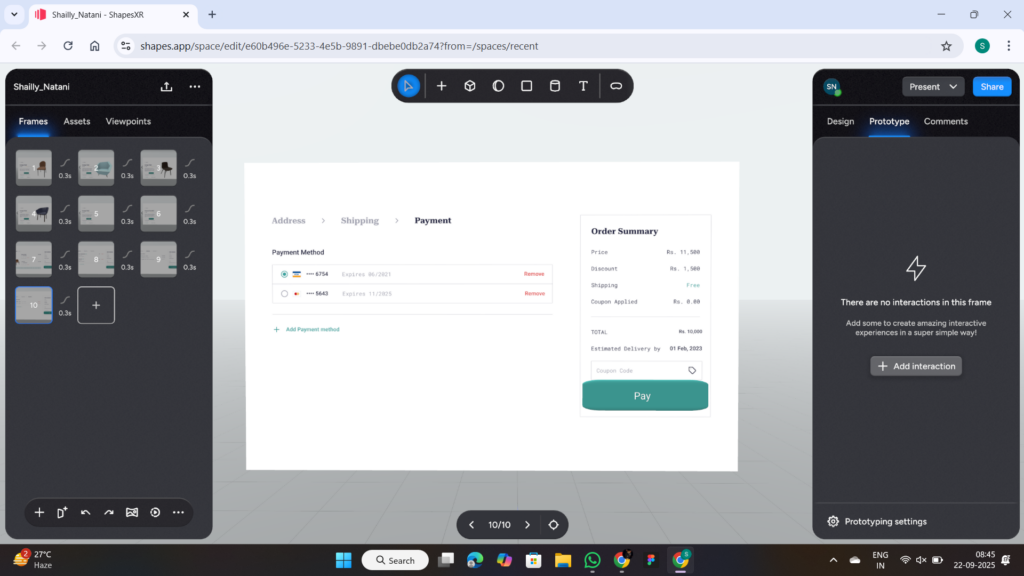
Proceed to Checkout → Order Summary
Spatial Thinking
Though viewed in 2D, the experience was designed to be VR-ready, allowing users to step inside a virtual showroom environment.
Micro-Feedback
Button tone changes on click
Smooth 0.3s transitions for premium pacing
User Experience Rationale
The experience was built around four core principles:
These refinements improved cohesion, clarity, and immersion.
User Testing
Participants: 5 users (ages 18–25)
Key Feedback
Layout felt clean and intuitive
3D models were engaging and realistic
Navigation was smooth
Improvement Areas
Needed clearer browsing instructions
Suggested tooltips and onboarding guidance
Requested contextual environment (e.g., living room setting)
Iterations
Added subtle instruction indicators
Improved lighting consistency
Simplified cart view for readability
Key Learnings
This project expanded my understanding of spatial UX and immersive design. I learned:
How lighting dramatically impacts perceived realism
How to combine 2D UI screens with 3D objects in one environment
The importance of spatial placement of buttons and elements
How onboarding is critical in unfamiliar interfaces
How small visual refinements significantly improve immersion
Working in ShapesXR helped me think beyond flat screens and consider how users move, look, and interact in virtual space.
Outcome
The final prototype delivers a linear, immersive chair purchase journey that feels clean, intuitive, and spatially engaging. It demonstrates how storytelling, lighting, layout, and interaction design can combine to transform a traditional e-commerce flow into a 3D shopping experience.